

16 Jan PLANTATIONS AND TESTS FOR PHYTOREMEDIATION IN SITE S3 (BORRALHA MINE, PORTUGAL)
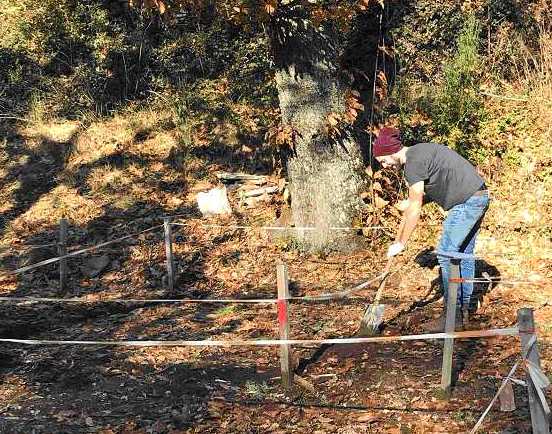
The Borralha mine (PhytoSUDOE´s site 3) integrates soils with high trace elements concentrations that can benefit from the application of phytotechnologies. In this context, inoculated poplar plants (Populus sp.) were transplanted to the mine soil plots in April, 2017 intercropped with alfalfa.

Moreover, in September, winter crops were established to evaluate different solutions including sunflower (Helianthus annuus) an energy crop with phytoremediation capacity.

Apart from this, in parallel, a greenhouse experiment using sunflower and soil collected from experimental plots in Borralha amended with different concentrations of biochar is being carried out by scientists of the Universidade Católica Portuguesa.
The Borralha mine (60 km NE from Porto) closed in 1986 and was mainly focused on wolframite, scheelite and chalcopyrite. The sources of contamination are the tailings with huge volumes, and the pond with rejected muds and slush discharged from the ore process. This accumulation of “sterile” from the exploitation and ore treatment is widespread throughout the mining area promoting the formation and drain of acidic waters.
Within PhytoSUDOE, mychorrizal fungi and plant-growth-promoting bacteria will be inoculated in the plantations to foster their establishment and the recovery of soil functions. The use of such sites to establish plants that can be used as biomass for energetic purposes can provide an economic added value. The vegetation cover helps mitigating the problem of disseminating the pollutants through the different environmental compartments and promotes the recovery of the ecosystem soil functions through time.