

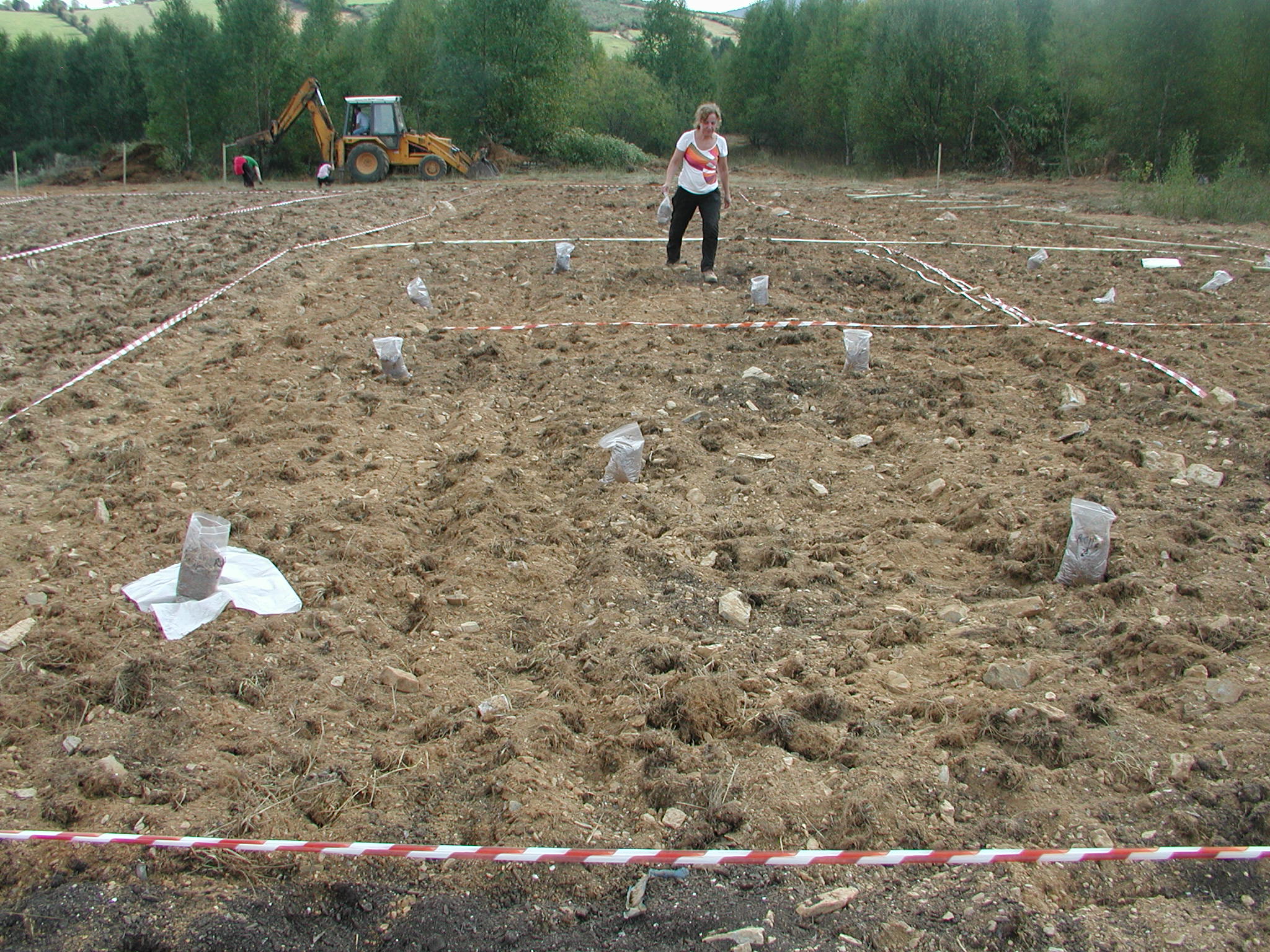
07 Jul New experimental plots in S7 (Rubiais mine) and S8 (Touro mine), Galicia (Spain).
New experimental plots established at the Cd/Zn mine of Rubiais (site S7) in May 2017
In February 2017, the CSIC and USC groups received cuttings of Salix smithiana from the Silva Tarouca Research Institute for Landscape and Ornamental Gardening (Czech Republic). Salix smithiana has been shown in other studies to be an efficient accumulator of Cd and Zn in its aboveground biomass. The objective of PhytoSUDOE is to evaluate bacterial-induced improvements in the growth and/or metal uptake and accumulation of this species.
Cuttings were rooted in a perlite:sand mixture in the greenhouse and were inoculated with four rhizobacterial strains (Streptomyces sp. SK20.12, Rhodococcus sp. SK12.6 Bacillus sp. SK2.3, and Massilia sp. P87) and one endophytic bacterial strain (Pseudomonas reactans EDP28). These bacterial strains present plant growth promoting traits, such as phytohormone production or the capacity to solubilise inorganic P or to produce siderophores. Cuttings were kept in perlite:sand mixture until roots were well developed and then transplanted into pots with soil from the field site. They were inoculated at both stages of growth. Small potted trees were transplanted in May 2017 into the S7 field site.
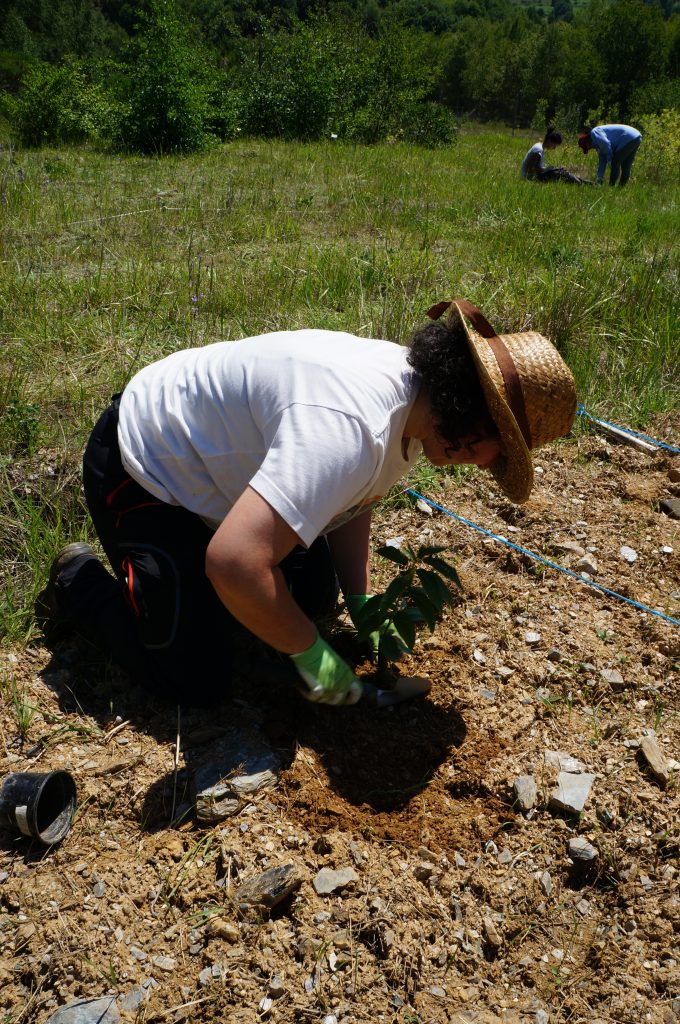
Planting of Salix smithiana at S7
New experimental plots established at the Cu mine of Touro (site S8) in April 2017
New plots have been established at S8 to assess the application of Populus and Salix clones, as well as the benefits of microbial inoculation, for the phytostabilisation of Cu and production of biomass. Two soil amendments are being contrasted: compost based on sewage sludges and pine barkings versus a technosol mixtures based on sewage sludges and alumina slag.
In February 2017, the CSIC and USC groups received cuttings of Salix caprea, S. viminalis and Populus nigra from the INRA group (FR) and of Populus maximowiczii x Populus trichocarpa cv. Skado and Populus x canadensis clone AF2.
Cuttings were rooted in a perlite:sand mixture with nutrient solution in the greenhouse. Rooted cuttings were inoculated with a blend of ecto- and endo-mycorrhizal fungi (INOQ Forest inoculum supplied by INOQ GmbH, Germany) and a combined inoculum of four plant growth promoting rhizobacterial strains. Four treatments were established in the field: (1) non-inoculated Populus planted as monocultures, (2) inoculated Populus planted as monoculture, (3) non-inoculated Populus intercropped with alfalfa/clover, and (4) inoculated Populus intercropped with alfalfa/clover.
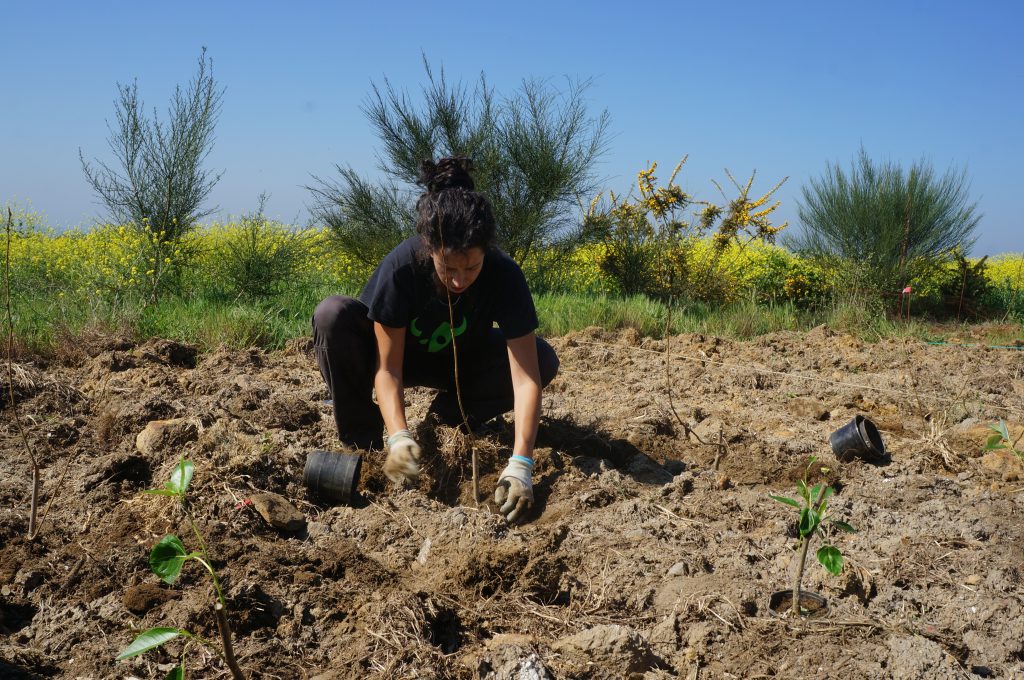
Planting of field (S8) plots and soil sampling
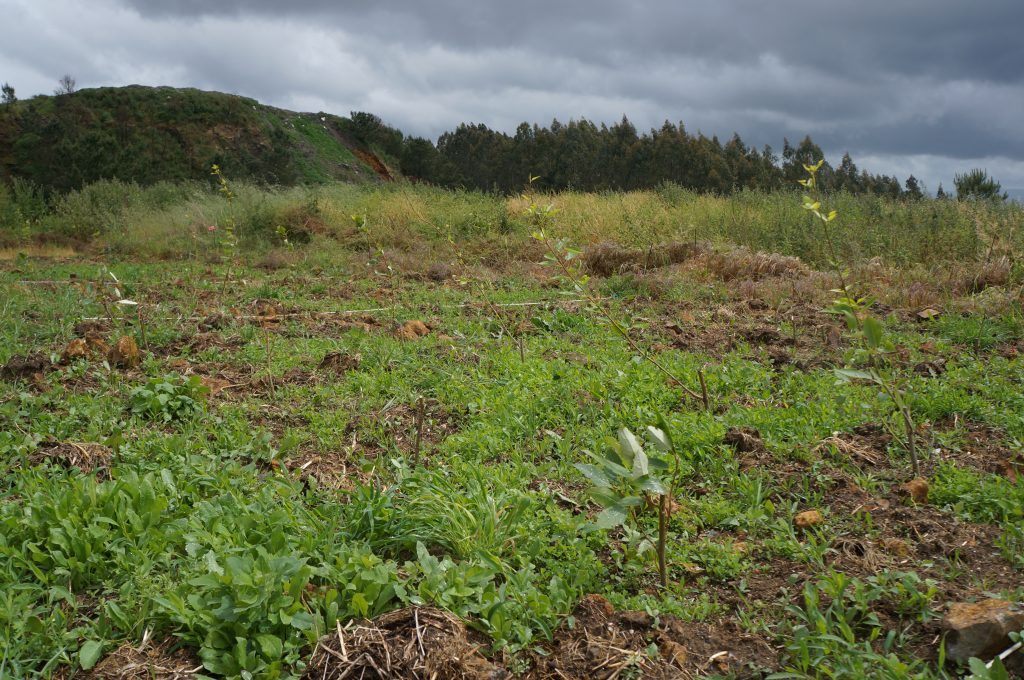
Plots of Populus intercropped with Alfalfa/clover at S8