

15 Dec PhD about the characterization of plant-associated bacterial communities in soils enriched with trace metals
On the 8th of September 2017 the candidate María Touceda González successfully defended her doctoral thesis in the Instituto de Investigaciones Agrobiológicas de Galicia (IIAG-CSIC) in Santiago de Compostela. The thesis was carried out under the supervision of Dr. Ángeles Prieto Fernández and Dr. Petra Susan Kidd, tenured scientists of the Soil Microbiology group of the IIAG-CSIC. The thesis was entitled “Molecular tools to characterise plant-associated bacterial communities in soils naturally enriched or contaminated with trace metals”.
This thesis evaluated, on one hand, the effect of medium- to long-term phytomanagement options on the structure, diversity and activity of soil microbial communities, as well as the potential of these biological parameters for monitoring the success of these techniques in the remediation of contaminated soils. For this, soils were sampled from trace metal-contaminated sites across Europe where distinct phytomanagement options were implemented for a minimum of 5 years, including the site Saint-Medard d’Eyrans (managed by BIOGECO; France) which forms part of the field site network of the PhytoSUDOE project (Site S1). On the other hand, the thesis characterises the rhizosphere bacterial communities associated with plants growing in natural metal-rich soils, such as the hyperaccumulator Alyssum serpyllifolium and the metal-excluder, Dactylis glomerata. To achieve these objectives molecular techniques were used to permit a wider vision than that obtained using traditional techniques based on the cultivation of microorganisms.
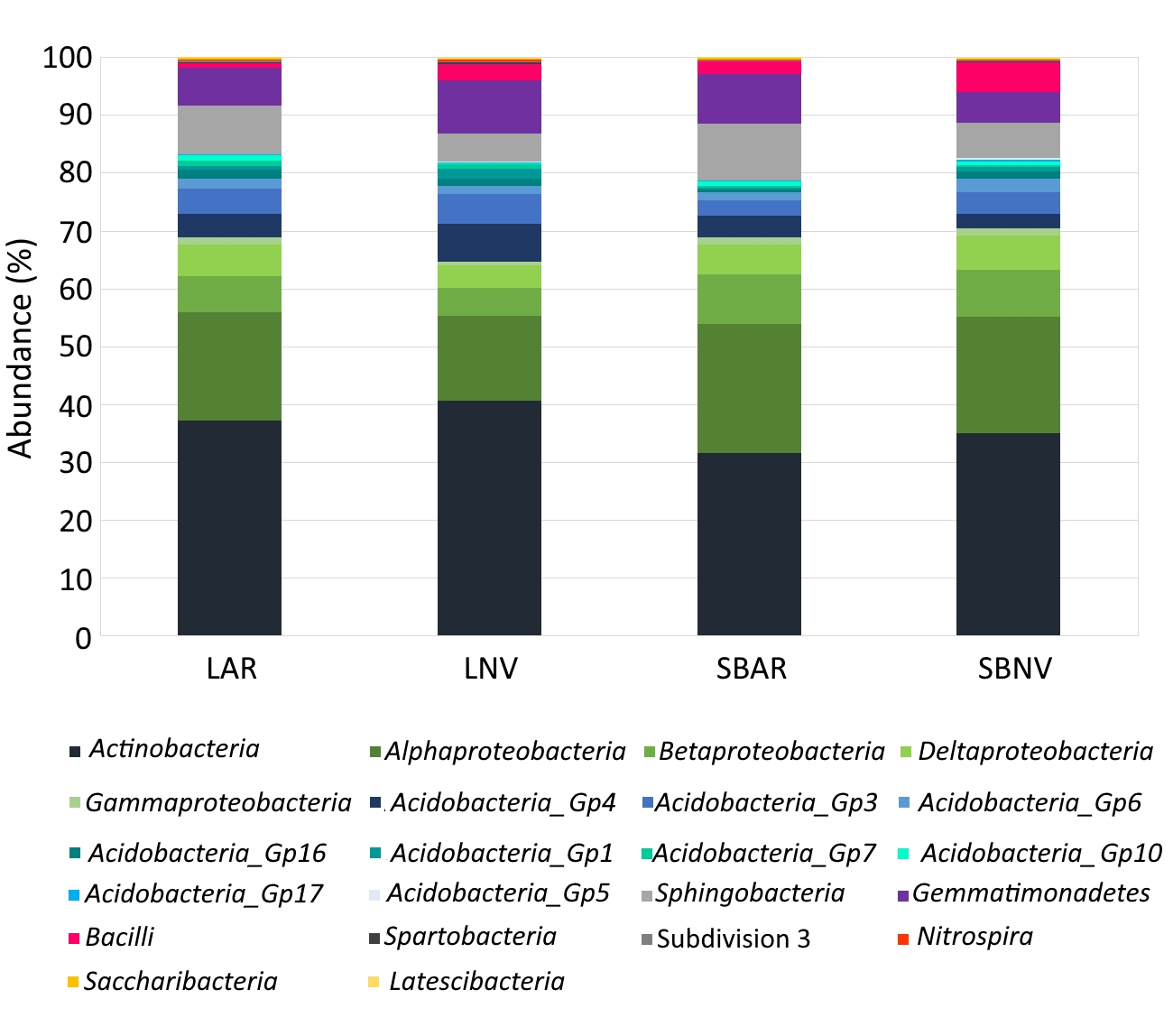
The results demonstrated that the phytomanagement options implemented led to an increase in microbial biomass and activity, as well as clear modifications in the bacterial community structure and diversity (Figure 1). These changes were primarily observed in the contaminated soils where organic and inorganic amendments were incorporated. The study showed that the microbiological parameters used were sensitive indicators of the changes induced by these phytotechnologies on a medium- and long-term basis, reinforcing the idea that these should be used in combination with traditional physicochemical analyses of soil in this type of study. Regarding the rhizosphere bacterial communities associated with the Ni-hyperaccumulator and excluder plants the results indicated that these rhizosphere communities were significantly different, both between the two plant species and from the surrounding non-vegetated ultramafic soils. In addition, compared to non-vegetated soil an enrichment was observed in the rhizosphere soil of the Ni hyperaccumulator in members of the phyla Bacteroidetes, Actinobacteria and the classes Actinobacteridae, and Proteobacteria and the class Alphaproteobacteria (Figure 2).
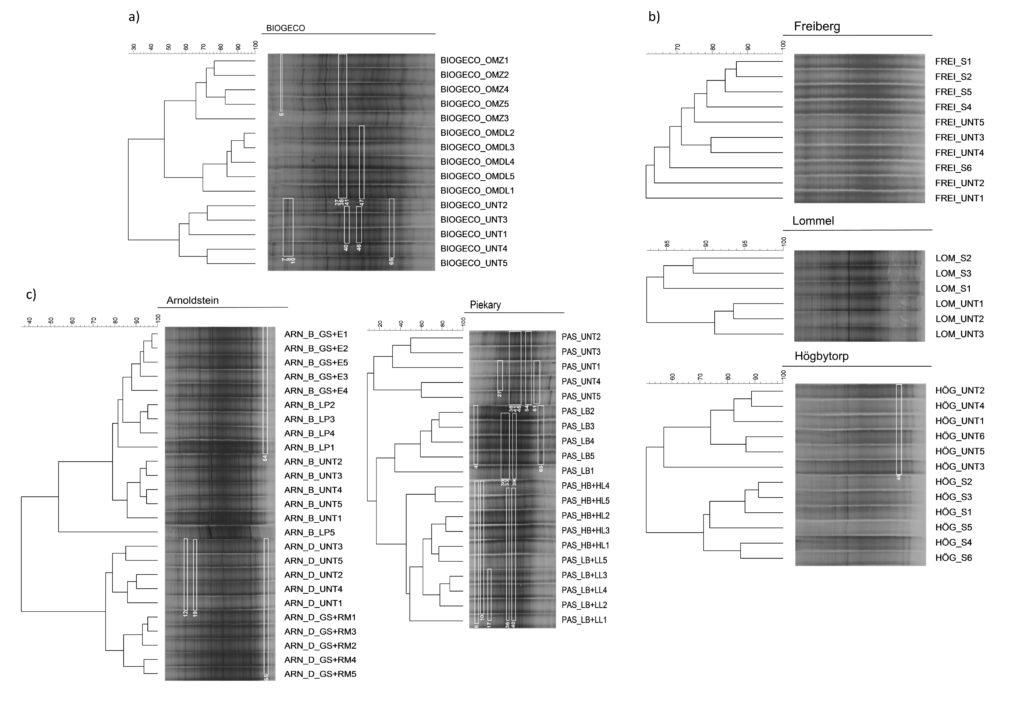
Figure 1. UPGM dendrogram based on Pearson’s correlation similarity matrices of soil bacterial communities from untreated soils and soils where phytomanagement options were implemented. a) Biogeco site where aided-phytoextraction and aided-phytostabilisation was implemented; b) Freiberg, Högbytorp and Lommel sites where phytoextraction was implemented; and c) Arnoldstein and Piekary sites where in situ stabilisation and phytoexclusion was implemented.
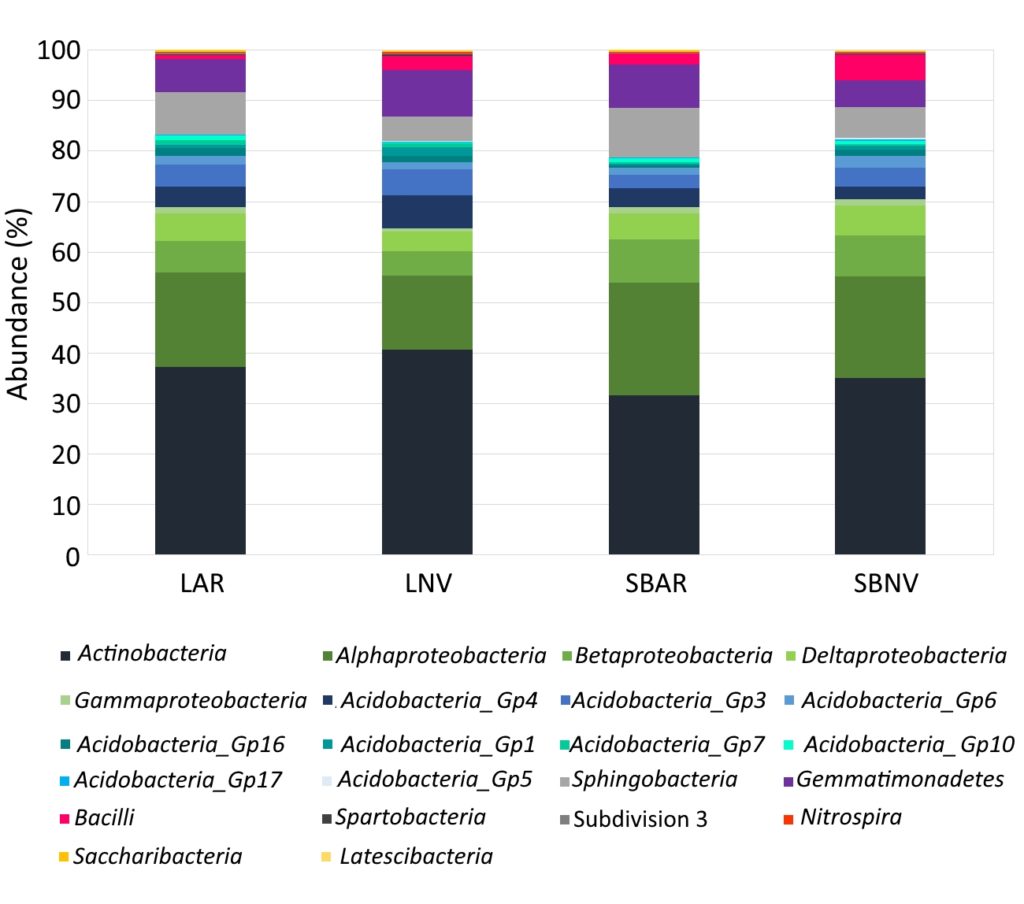
Figure 2. Major bacterial classes (with relative abundance over 1%) detected in the 16S rRNA barcode pyrosequencing libraries associated with the Ni-hyperaccumulator Alyssum serpyllifolium. LAR and LNV: rhizosphere and non-vegetated soil, respectively, from Barazón; SBAR and SBNV: rhizosphere and non-vegetated soil, respectively, from Sierra Bermeja.